
Rosazea behandlung München
Rosacea is a chronic inflammatory skin condition that affects millions of people worldwide – especially in Northern Europe and Germany. In Munich, about 10-15% of the population suffers from this stubborn facial skin disease. It is characterized by persistent redness, visible blood vessels, inflammatory pustules, and an intense burning or stinging sensation of the skin. The good news: With modern, targeted treatment methods, rosacea symptoms can be significantly reduced – without having to resort to invasive laser procedures.
Rosacea Treatment Munich Prices
This treatment is specifically designed for the requirements of rosacea-prone skin. However, in cases of acute inflammation, hypersensitivity, or ongoing therapies, prior consultation is absolutely necessary.

For a Clear Complexion
What is Rosacea? Recognizing the Definition & Symptoms
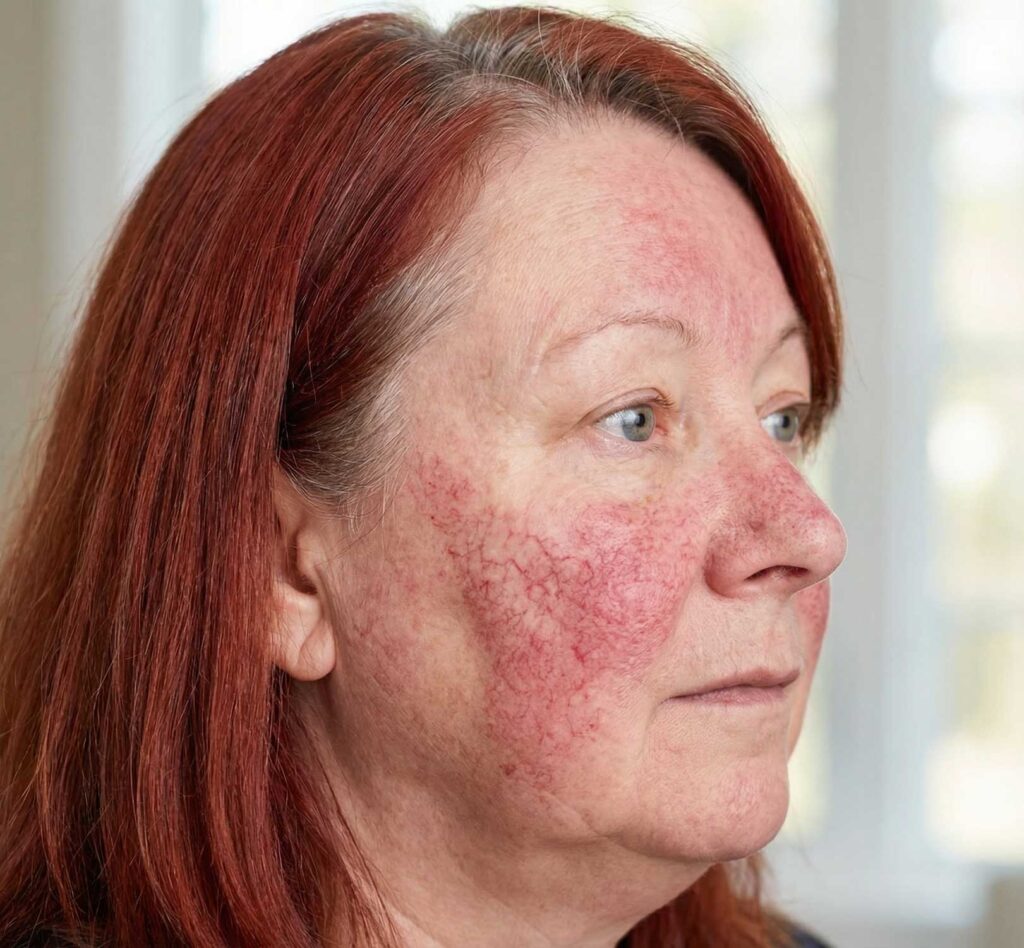
Rosacea (also known as copper rose) is not acne and not an allergic reaction. It is a vascular and inflammatory disease where the blood vessels in the face react hypersensitively to various stimuli. This leads to chronic redness, primarily occurring in the center of the face – on the cheeks, nose, forehead, and chin.
The clinical picture varies greatly from person to person. Different symptoms can dominate for each patient, and the severity varies considerably. Some people report occasional flushing events, while others struggle with persistent redness and inflammatory nodules.
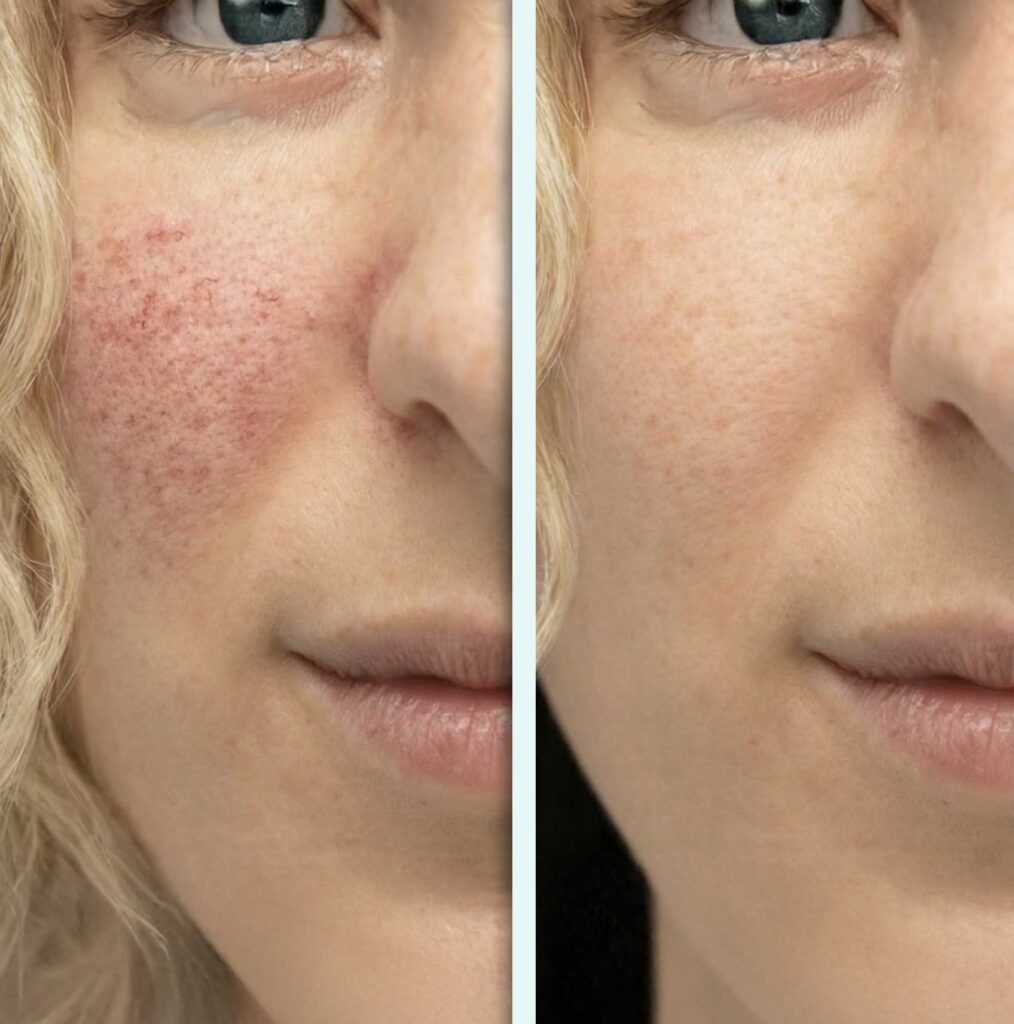
The 5 Most Common Symptoms of Rosacea
Persistent facial redness (Erythema) – The facial skin constantly appears red, especially on the cheeks and nose. This redness can be fleeting or persist permanently.
Visible blood vessels (Telangiectasia) – Small red or purple lines become visible under the skin, especially after triggers like heat or alcohol.
Inflammatory papules and pustules – Raised, red nodules similar to acne develop, but without blackheads (comedones). This is a crucial difference from classic acne.
Burning and stinging – Intense discomfort characterizes the condition, especially after certain triggers. The skin feels rough, dry, and hypersensitive.
Ocular Rosacea – In severe cases, the eyes are involved: redness, tearing, a foreign body sensation, light sensitivity, and even inflammation of the eyelids (blepharitis) can occur.
The Difference Between Rosacea and Couperose
Couperose is actually Stage I of Rosacea – the initial form with facial redness and dilated blood vessels, but not yet with inflammatory pustules. Many people use the terms “couperose” and “rosacea” synonymously, but from a dermatological perspective, couperose is technically just one aspect or the initial stage of the rosacea disease.
Couperose is characterized by:
Persistent facial redness
Dilated capillaries
Increased skin sensitivity
Fleeting or sustained flushing events
This distinction is important for choosing the treatment, as couperose often responds very well to skin barrier-strengthening procedures such as microneedling and professional peels.
The 3 Stages of Rosacea
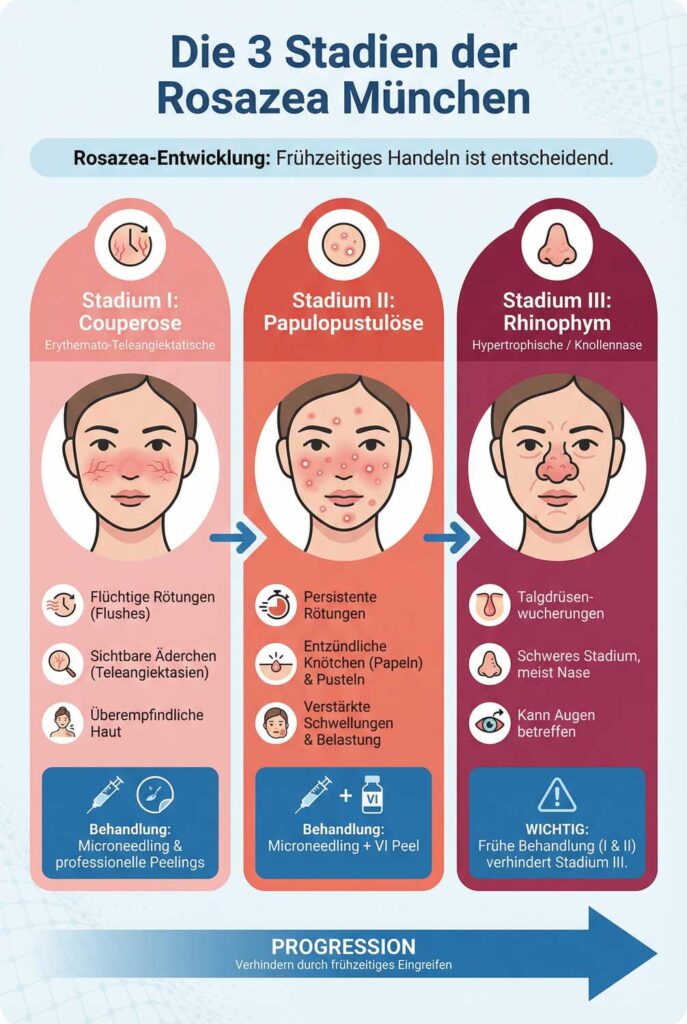
Rosacea typically develops in three stages. Early understanding is crucial to prevent progression.
Stage I – Erythematotelangiectatic Rosacea (Couperose)
Hypersensitive skin with fleeting redness (flushes) that becomes more persistent over time. Visible blood vessels (telangiectasias) under the skin are characteristic.
Treatment: Microneedling and professional peels prevent progression and significantly reduce symptoms.
Stage II – Papulopustular Rosacea
Persistent redness with inflammatory nodules (papules) and pustules – similar to acne, but without blackheads. Increased swelling and psychological distress.
Treatment: Microneedling + VI Peel show particularly good results here and normalize vascular function.
Stage III – Hypertrophic Rosacea (Rhinophyma/Bulbous Nose)
A rare, severe stage with sebaceous gland overgrowth – mostly affecting the nose. More common in men. Can spread to the eyes.
Important: Early treatment in Stages I & II is crucial to prevent Stage III.
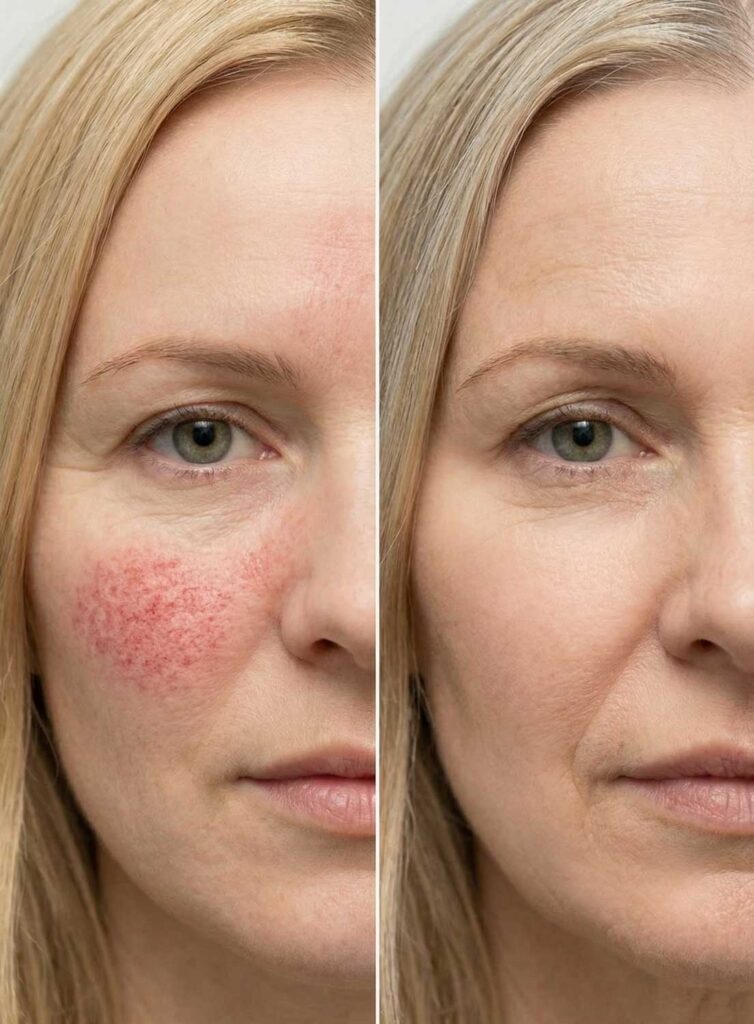
For a Clear Complexion
Causes & Risk Factors: Why Does Rosacea Develop?
The exact cause of rosacea is not yet fully understood, but several factors play a role: genetic predisposition, an overactive immune response, an impaired skin barrier, increased Demodex mites, and neurovascular dysfunction.
Common Personal Triggers:
Environment: UV radiation, heat/cold, temperature changes.
Diet: Alcohol, spicy foods, hot beverages, tomatoes, citrus fruits.
Lifestyle: Stress, intense exertion, sauna, lack of sleep.
Skincare: Unsuitable cosmetics, aggressive peels, alkaline soaps.
Medication: Vasodilators, chronic corticosteroids.
Tip: A trigger diary helps to identify personal triggers.
Risk Groups:
People with fairer skin (skin type 1-2), reddish/blonde hair, and light eyes are more frequently affected. Rosacea typically occurs between the ages of 30-50 – earlier in women, more severely in men. Rosacea is particularly common in Northern Europe (the “Curse of the Celts”), especially among people with a Celtic, Scandinavian, or British background.
Skin Barrier Strengthening: The Foundation of Rosacea Therapy
An often overlooked but fundamentally important aspect: with rosacea, the skin barrier is inherently impaired or weak. Therefore, strengthening this protective function is not only therapeutically effective but also preventatively essential.
What is the Skin Barrier?
The skin barrier is the outermost layer of the epidermis (Stratum Corneum), a complex layer of lipids (fats), proteins, and dead skin cells. It functions like a protective shield:
It prevents moisture loss (TEWL – transepidermal water loss).
It blocks irritating substances, bacteria, and allergens.
It regulates skin temperature.
It contributes to elasticity and structure.
With rosacea, this barrier is compromised, which explains:
Why the skin is hypersensitive: Irritating substances can penetrate more easily.
Why stimuli quickly cause redness: The barrier cannot filter and protect adequately.
Why inflammation persists: The skin is constantly irritated and in an inflammatory state.
How Microneedling and Professional Peels Strengthen the Barrier:
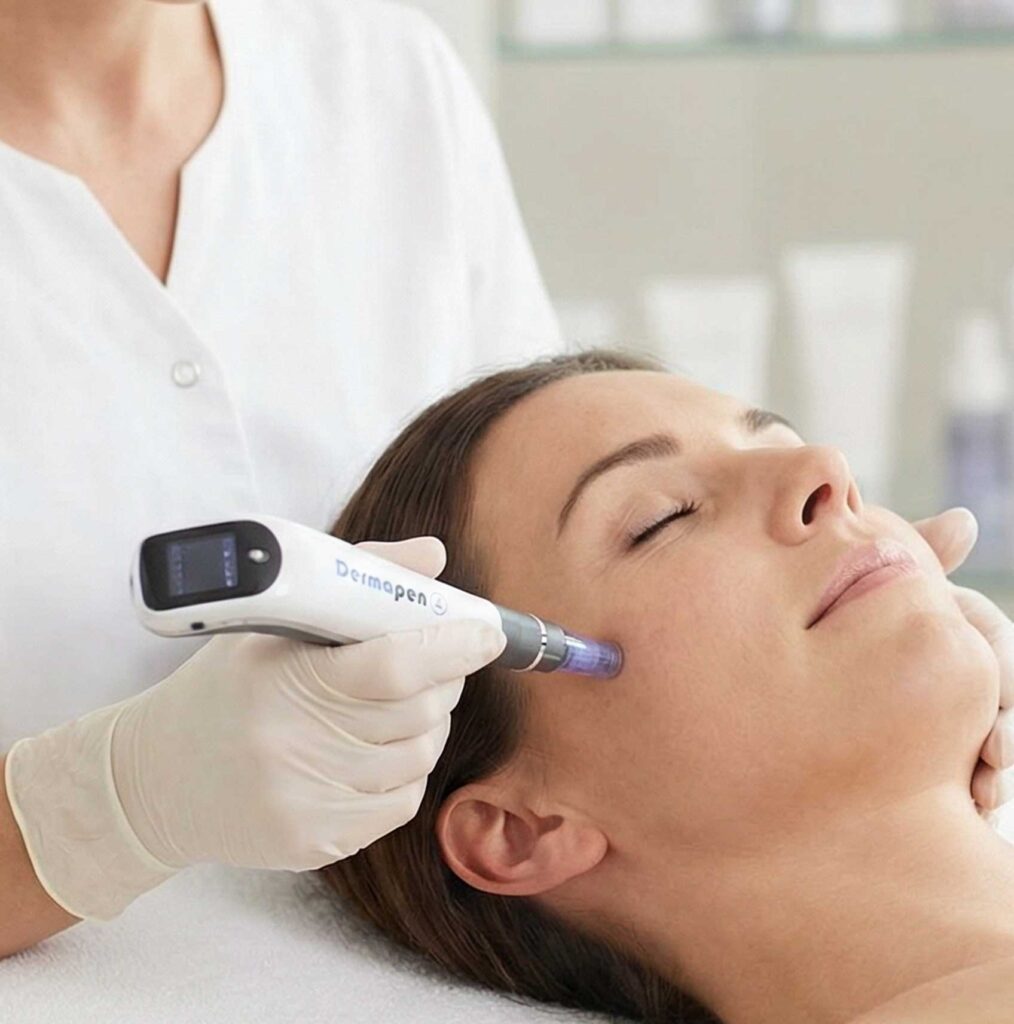
Triggering Ceramide Synthesis: These procedures trigger the production of ceramides – the main lipid components of the barrier.
Promoting Tight Junction Proteins: Proteins like claudins and occludins, which ensure integrity between skin cells, are reinforced.
Reduction of TEWL: With a restored barrier, transepidermal water loss drops significantly – the skin remains hydrated.
Normalization of Skin Cell Maturation: The process of cell differentiation normalizes, leading to a healthier, more robust skin structure.
After a series of these treatments (typically 4-6 microneedling sessions over 4-6 months), patients report:
Significantly less redness
More robust, less reactive skin
Better tolerance towards previous triggers
Less burning and stinging
A visibly improved complexion
Free Skin Analysis
Before we begin any treatment, I want to truly get to know your skin. That is why I offer you a professional skin analysis, so we can find out together what your skin really needs.
Rosacea Treatment Munich: Effective Therapy Without Lasers
With rosacea, the skin barrier (Stratum Corneum) is fundamentally impaired. This protective layer of lipids and proteins normally prevents moisture loss, blocks irritations, and regulates skin temperature. In rosacea patients, it is compromised – which is why the skin is hypersensitive, stimuli quickly cause redness, and inflammation persists.
How Microneedling and Professional Peels Strengthen the Barrier:
Stimulate ceramide synthesis (main lipid components)
Promote tight junction proteins (cell integrity)
Reduce moisture loss (TEWL)
Normalize skin cell maturation
After a series (4-6 microneedling sessions over 4-6 months), patients report: significantly less redness, more robust skin, better trigger tolerance, less burning, and a visibly improved complexion.
FAQ – Frequently Asked Questions
Is rosacea curable?
Rosacea is not curable, but with the right treatments (Microneedling, VI Peel, Environ) and trigger management, symptoms can be significantly reduced or virtually disappear. Many patients report remission after a treatment series – minimal or no symptoms anymore.
How long does rosacea treatment take to show results?
Initial results are often visible after 1-2 weeks. Optimal results develop after 4-6 sessions over 4-6 months. Some patients notice continuous improvement over 6-12 months.
Can you work during the rosacea treatment?
Yes. After microneedling and VI Peel for rosacea, slight to moderate redness may occur (2-48 hours). You can go to work, but you should avoid UV exposure, skip makeup on the first day, and avoid intensive workouts/saunas for 48 hours.
What skincare after rosacea treatment?
Gentle, barrier-strengthening products without irritating ingredients. We recommend Environ lines: gentle cleansers (pH 4.5-5.5), regenerating serums with antioxidants, intensive moisturizers with lipids, daily sun protection (SPF 50+).
Is microneedling for rosacea painful?
Microneedling for rosacea is not painful – at most slightly uncomfortable. With modern technology and professional application, discomfort is minimized.