Brown or grey patches on forehead, cheeks and upper lip that look almost the same on both sides and get darker after summer? That is very likely melasma, and it behaves differently from an ordinary sun spot: a chronic, hormone- and light-driven pigmentation disorder that can be controlled well but rarely removed for good. The catch: most sufferers do exactly what makes it worse, without knowing it. Three things almost nobody knows about. One is probably standing in your kitchen right now, one is in your bathroom cabinet, and the third is even sold to you as a solution in some studios. Which ones, you will find out below.
The honest answer from a beautician, up front: Melasma is a medical pigmentation disorder and should be assessed by a dermatologist. The most important measure is protection from light and heat, followed by actives and gentle treatments. The goal is to lighten the patches and reduce relapses, not to “delete them once”.
We have a separate article on peels for melasma: Which peel for melasma. Here it is about the big picture: causes, triggers and the right overall plan.
✨ Unsure whether it is melasma? We will look at your skin for free – and tell you honestly what is realistic.
Contents
Recognising melasma: how you notice it

Typical features
Symmetrical: The patches usually sit almost identically on both sides of the face, mainly on cheeks, forehead, upper lip and chin.
Flat and blurry: Not one sharp dot but soft brown or grey-brown areas.
Changeable: Darker in summer, lighter in winter.
Mostly in women, often between 20 and 50, more common in medium to darker skin types.
🧑⚕️ Dermatologist clarifies · 🔍 Symmetrical · ☀️ Darker in summer
To tell them apart: single, sharply defined patches are more likely age spots or sun spots. Dark traces after pimples are a different story, which we explain in the article Pimple marks or acne scars. You will find a general overview at Removing pigment spots.
Causes: hormones, light and heat
- Hormones: Pregnancy (then it is also called chloasma), the pill or other hormone preparations can trigger or worsen melasma. More on hormones and skin in the article Hormonal acne.
- Predisposition: If your mother or sister has melasma, the likelihood is higher.
- UV light: The best-known trigger. Sun activates the pigment-forming cells.
- Visible light: The light you can see can also trigger pigment in melasma. This is often forgotten.
- Heat: Heat seems to worsen melasma. Typical sources are sauna, hot yoga or long cooking at the stove.
The light secret: why normal sun protection is not enough
The trick
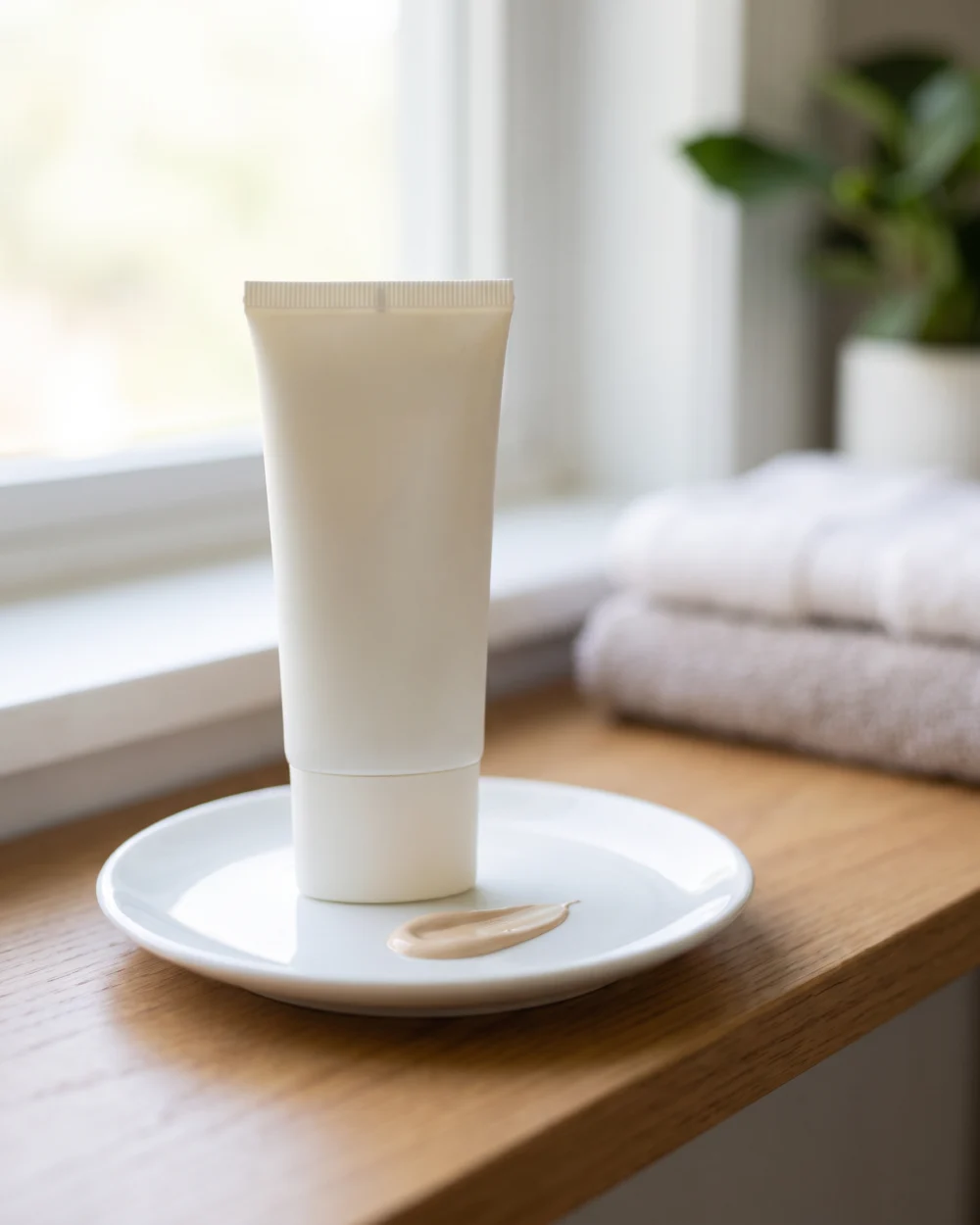
Most sunscreens protect against UV, but hardly against visible light. With melasma that is a problem. This is where tinted sunscreens with iron oxides help: the iron oxides (which give the beige tone) also block part of the visible light.
In addition: a wide hat brim, sunglasses, shade, and also UVA protection behind windows and in the car. More on the right factor in the article SPF 30 vs. 50.
🎨 Iron oxides · 🧢 Hat · 🚗 Also in the car
The underrated factor
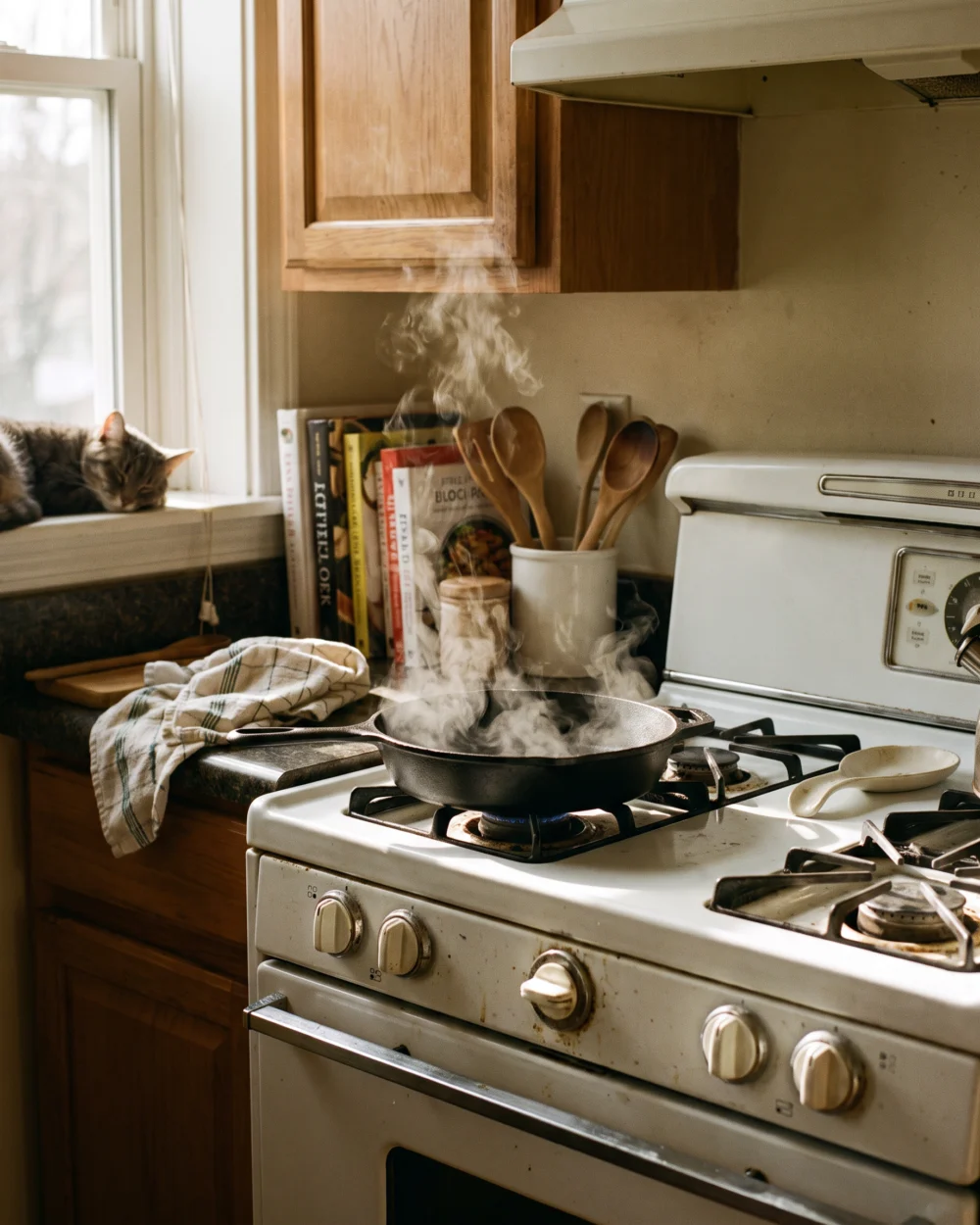
Heat is the trigger almost nobody has on their radar. Anyone who wants to control their melasma should also watch out for warmth: do not stand for hours over the hot stove, critically review sauna and hot yoga during that phase, look for shade in the sun.
This is no ban but a hint: if your melasma does not calm down despite good sun protection, it is worth looking at heat sources.
🌡️ Avoid heat · 🔥 Stove, sauna · 🔍 Gather clues
The overall plan: what helps
| Step | What | Note |
|---|---|---|
| 1. Protection | Tinted sunscreen, hat, avoid heat | The basis, without it everything else works worse |
| 2. Actives | Azelaic acid, niacinamide, vitamin C | Introduce slowly, effect after weeks to months |
| 3. Medical | E.g. tranexamic acid or prescription lighteners | Only after medical clarification |
| 4. Gentle treatments | Careful peels, see Peel for melasma | Not aggressive and not in the sun season |
| 5. Caution | Laser, IPL, deep peels | Can worsen melasma, only by specialists |
Why lasers are risky with melasma
Lasers and IPL work with energy and heat, and exactly both can “wake up” the pigment-forming cells in melasma. Then the patch comes back darker after the treatment, a setback many sufferers know. That is why we say clearly: with melasma we do not reach for the laser, but rely on gentle paths and a dermatologist when more is needed. More on our approach in the article Peel for melasma and on the page about chemical peels.
Relapses: why it comes back in summer
Melasma is chronic. Even when the patches have almost disappeared, the predisposition remains. As soon as sun, heat or hormones strike again, they can return. That is why after the lightening phase there is a maintenance phase: sun protection stays, actives continue at a low dose, check-up appointments. That is no failure but the normal course.
And a note on a gentle complement: LED light therapy (near-infrared) can calm the skin but does not replace a pigment treatment.
How to find out what your skin really needs
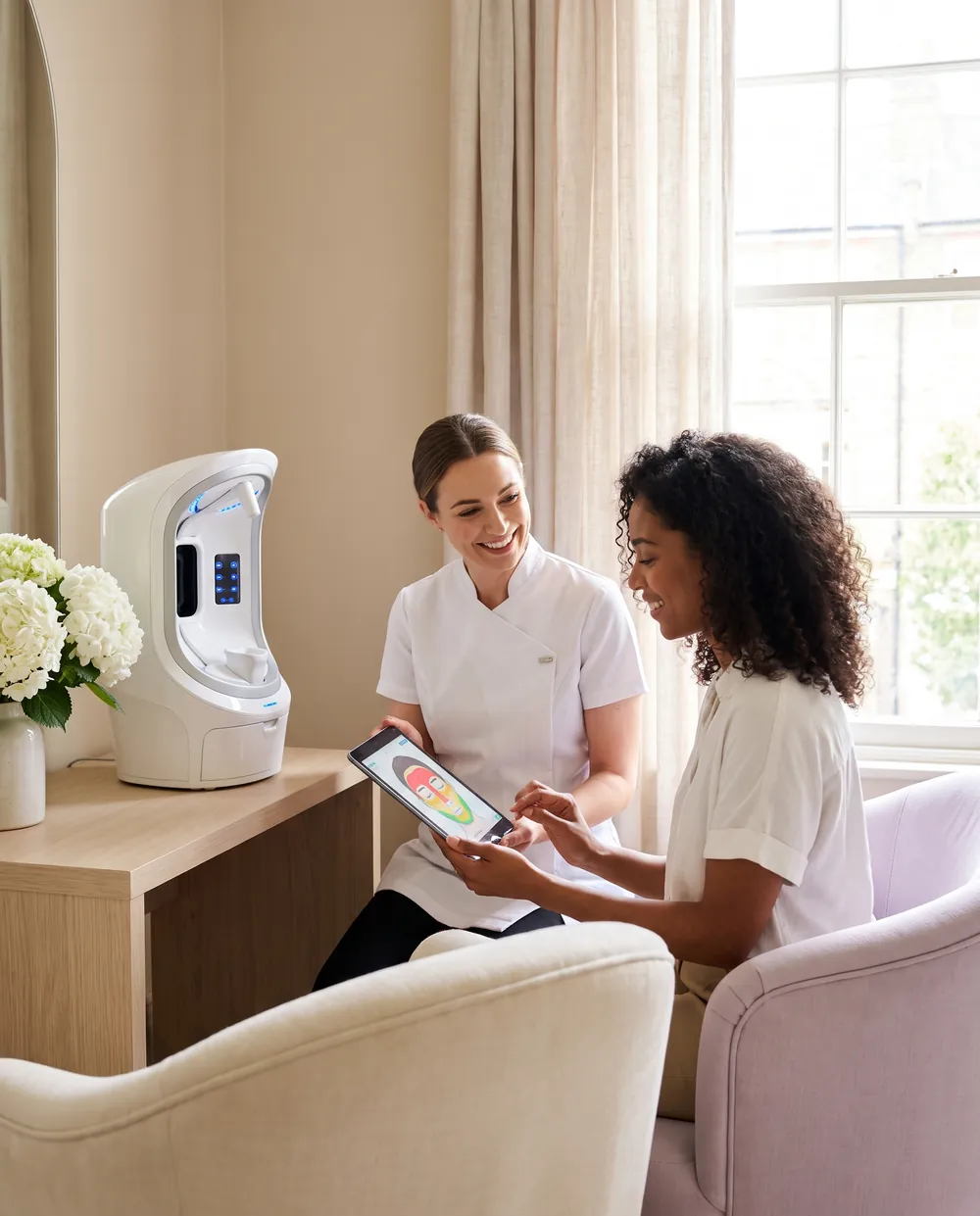
In the free skin analysis we look at the patches, talk about hormones, sun and your skincare and tell you honestly what makes sense in the studio and when a dermatologist should be involved.
1
Book an appointment
Book online – your skin analysis is completely free.
2
Skin analysis
We assess skin type, hydration, pores & pigmentation.
3
Get your plan
You get an honest recommendation – no obligation.
✦ 100 % free
Your free skin analysis in Munich
Take the first step towards a calmer complexion. Together we look at what your melasma needs, honestly, gently and without pressure to buy.
- Professional assessment of your skin type
- Honest, personal treatment recommendation
- Tips for your home care
- No obligation & no pressure to buy
FAQ about melasma
Does melasma go away on its own after pregnancy?
It can improve, but remains in many. Sun protection and patience are important, and if needed medical clarification.
Does it help to stop the pill?
Hormones can be a trigger, but whether and when you change anything you discuss with your doctor.
Can I have treatment in summer?
In sun season the skin is especially active. Many treatments are therefore preferably started in autumn or winter. Sun protection always applies.
Does microneedling help with melasma?
Only after a careful skin analysis and with great caution. Injuries and heat can trigger pigment, so timing and skin type matter.
Which sunscreen is best for melasma?
A tinted, mineral sunscreen with iron oxides and a high factor, which you apply daily and generously. Plus hat and shade.