Your cheeks are permanently flushed, you see fine red veins – and online “couperose” and “rosacea” seem to mean the same thing. They don’t. The key difference decides whether you should focus on cosmetic care or on medical treatment. By the end of this article you will know which side you are probably on.
The honest answer up front: couperose means permanently dilated small blood vessels. Rosacea is a chronic inflammatory skin condition in which couperose can be part of the picture. If you have pimples, burning or flare-ups, you very likely have more than couperose.
In practice: every rosacea can show visible veins, but not every couperose is rosacea. Sounds complicated? It will be clear in a moment – with a short self-test, a comparison table and concrete care tips.
✨ Not sure what your skin has? We will look at it for free – and tell you honestly whether you should see a dermatologist.
Contents
The difference in one sentence
The core principle
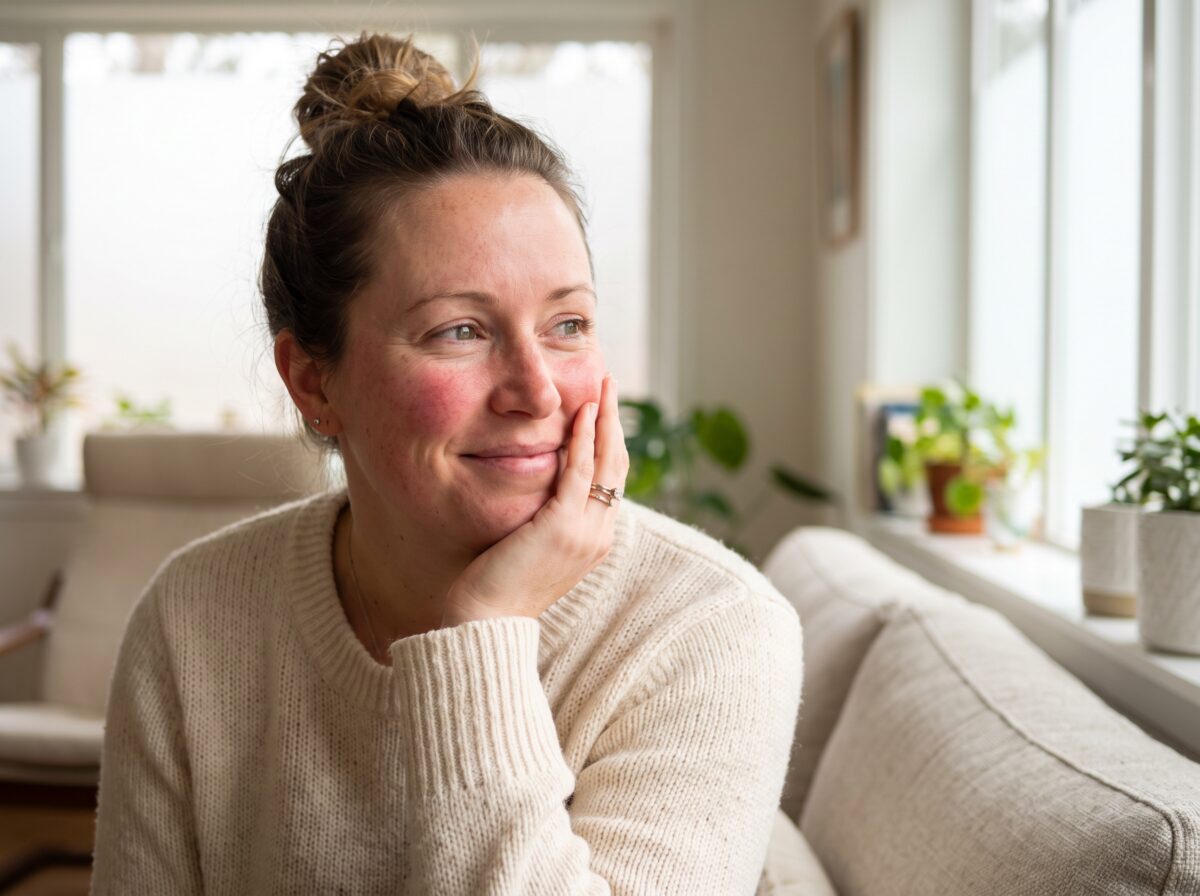
Couperose is a vessel problem: the tiny blood vessels in the skin are permanently dilated and show through as fine red or bluish lines, mainly on the cheeks and nose.
Rosacea is an inflammation problem: the skin is oversensitive, flushes in flare-ups, can burn and form pustules. The dilated vessels are only one part of the whole.
🩸 Couperose = veins · 🔥 Rosacea = inflammation · 🧑⚕️ Diagnosis by a doctor
Self-test: couperose or rosacea?
Briefly answer these five questions. The more “yes” answers, the more likely there is more behind it than couperose:
- Besides the redness, do you have small red bumps or pustules, but without blackheads?
- Does your skin sometimes burn or sting, especially after heat, sun or alcohol?
- Does the redness come in flare-ups – sometimes calm, sometimes clearly stronger?
- Is the skin on your nose getting thicker or bumpier?
- Are your eyes often dry, irritated or red?
Your result
With 0 to 1 “yes”: more likely couperose or sensitive skin. With 2 or more: have it examined by a dermatologist, as it may be rosacea. If the eyes are acutely involved, also see an eye doctor. The test does not replace a diagnosis.
Couperose vs. rosacea compared
| Feature | Couperose | Rosacea |
|---|---|---|
| Nature | Permanently dilated small blood vessels | Chronic inflammatory skin condition |
| Appearance | Fine red veins, diffuse redness | Redness, bumps, pustules, sometimes a thickened nose |
| Course | Stable, may slowly worsen | In flare-ups, often progressive without treatment |
| Symptoms | Usually none, at most a tight feeling | Burning, stinging, feeling of heat |
| Eyes | Not affected | May be involved |
| Responsible | Cosmetic care, possibly a dermatologist (vascular laser) | Dermatologist, cosmetic care as a complement |
Both appear most often after the age of 30 and are slightly more common in fair skin, and both can occur at the same time.
What throws the skin off balance
Typical triggers
For both skin conditions there are things that dilate the vessels and increase the redness. The most common are:
Sun and UV light – the most important trigger, which is why sun protection is a must.
Heat, sauna and hot showers
Alcohol, especially red wine, as well as very spicy food and hot drinks
Stress, emotional upset, temperature changes
Aggressive peels, scrubs and alcohol-based toners
☀️ Sun · 🍷 Alcohol · 🌶️ Spicy · 🔥 Heat

Tip: keep a small skin diary for two weeks. You will quickly see which triggers really strike in your case – not everyone reacts to coffee or red wine.
Treatment: what really helps
Clarify first, then treat
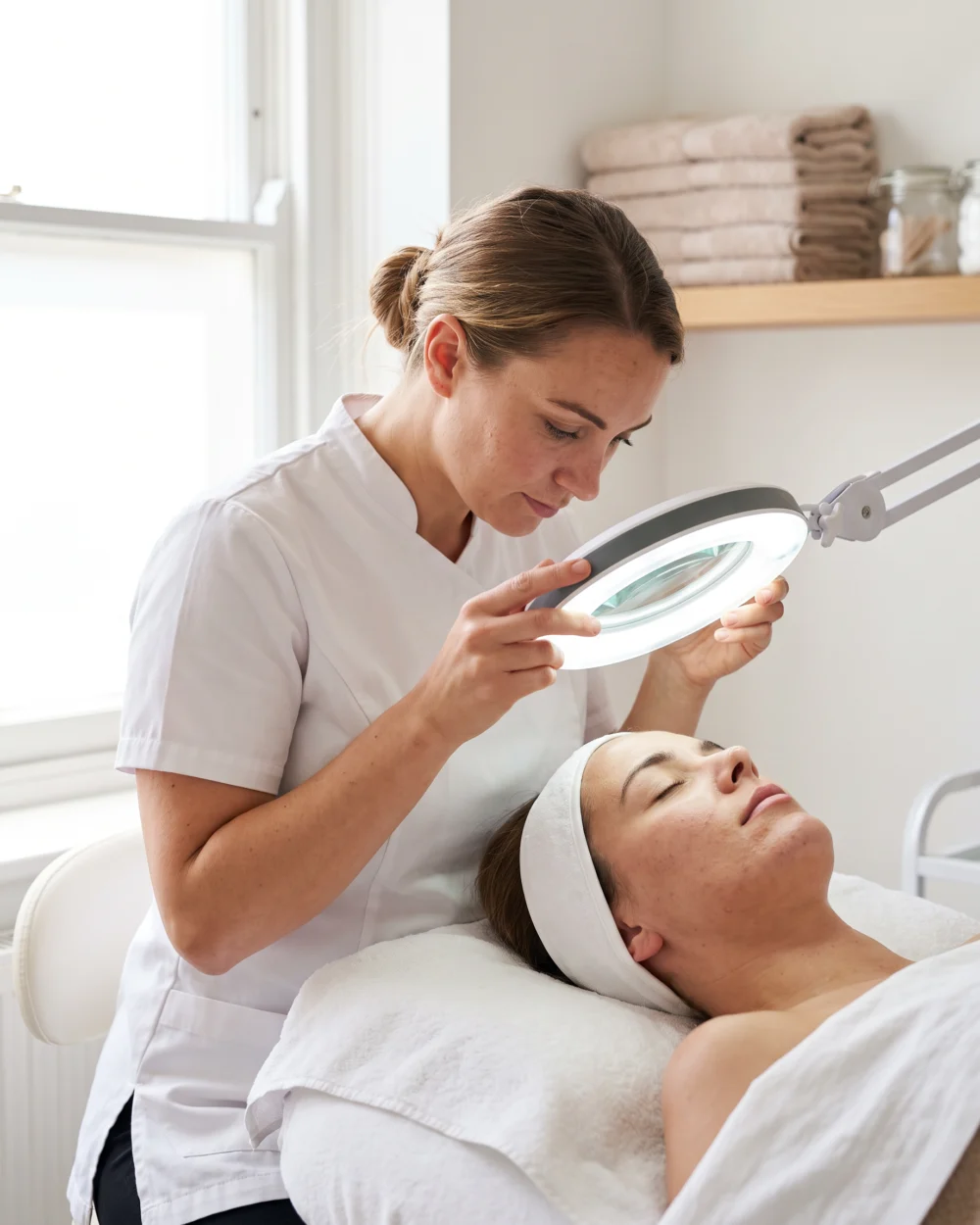
For rosacea, therapy belongs in medical hands. Depending on severity, dermatologists prescribe e.g. azelaic acid or other anti-inflammatory active ingredients. As a beauty studio we complement this with gentle care and soothing treatments – but not instead of the doctor.
For couperose, vessels can be closed with laser or IPL at the dermatologist. In the studio we focus on calming the skin and preventing further flare-ups. You can find more about our offer on our rosacea treatment page.
🩺 Doctor first · 💡 Soothe · 🛡️ Prevent flare-ups
Light therapy can also be used as support for sensitive, flushed skin. Whether it is an option for you is something we clarify beforehand in the skin analysis – during an acute flare-up we deliberately wait.
What we deliberately do not do on flushed skin
No aggressive acid peels, no microneedling and no heat treatments during a flare-up. Anything that additionally irritates the vessels can increase the redness.
The right care for flushed skin
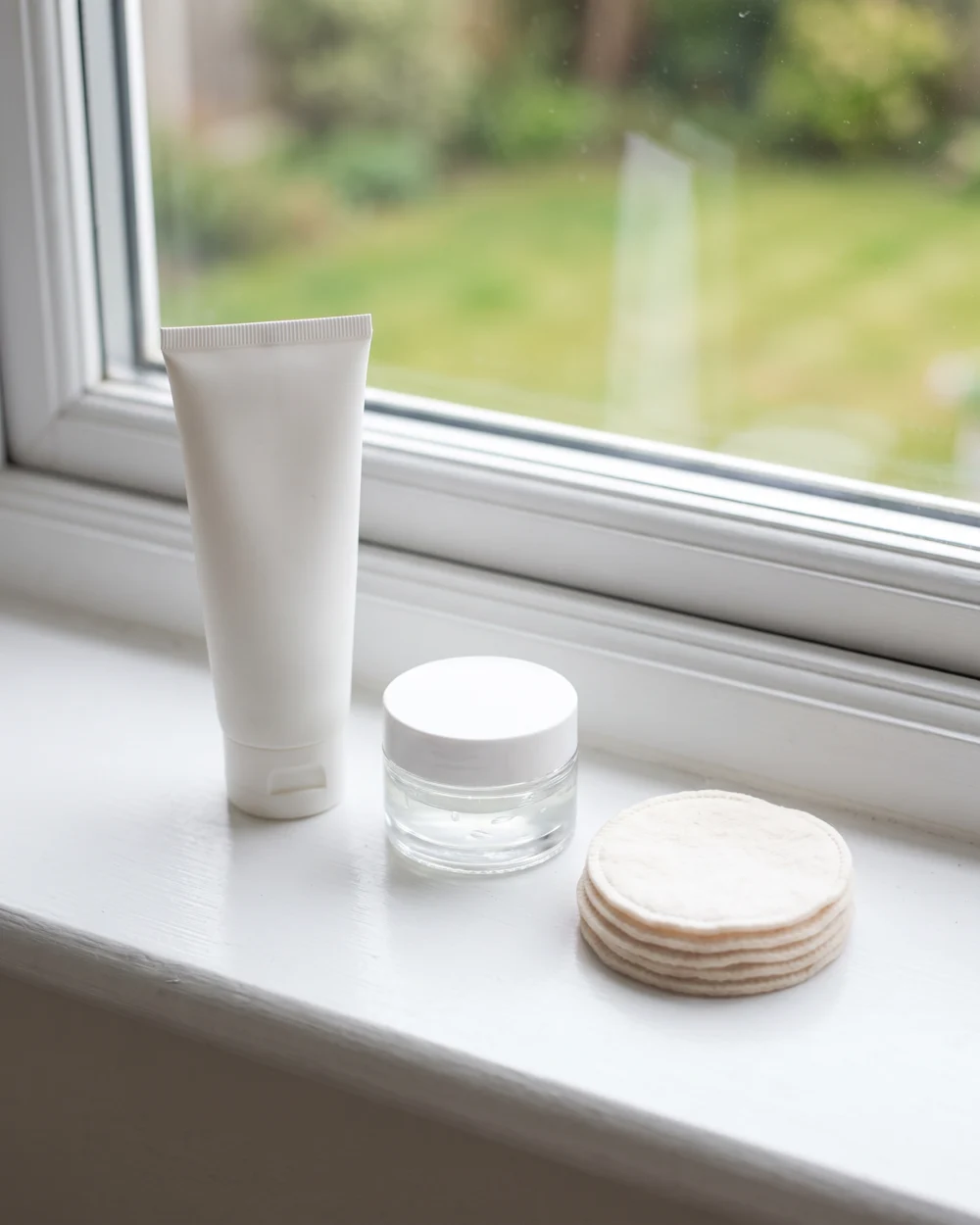
Your basics
Cleansing: gentle and lukewarm, without alcohol and fragrance. No cleansing brushes.
Care: soothing and barrier-strengthening, for example with panthenol, niacinamide in low doses or ceramides.
Sun protection: every day, ideally mineral (zinc oxide, titanium dioxide) as it irritates less.
In the evening: never wash with hot water, only pat the towel.
🧴 Gentle · ☀️ Sun protection · 🚿 Lukewarm
Important: if the skin around the mouth and nose burns and breaks out in pimples, it could also be perioral dermatitis, which is treated very differently from rosacea. If in doubt: get it clarified first.
How to find out what your skin really needs
Redness is rarely clear-cut. In the free skin analysis we look closely at your skin, discuss triggers and tell you honestly whether a cosmetic treatment makes sense or whether you should visit a dermatologist first.
1
Book an appointment
Book online – your skin analysis is completely free.
2
Skin analysis
We assess skin type, hydration, pores & pigmentation.
3
Get your plan
You get an honest recommendation – no obligation.

✦ 100 % free
Your free skin analysis in Munich
Take the first step towards calmer skin. Together we look at what is behind the redness and what really helps you.
- Professional assessment of your skin type
- Honest, personal treatment recommendation
- Tips for your home care
- No obligation & no pressure to buy
FAQ about couperose and rosacea
Can couperose turn into rosacea?
Couperose can be an early sign of rosacea. If flare-ups, burning or pustules appear alongside the veins, have it checked by a doctor.
Is rosacea curable?
Rosacea can be controlled well but is considered chronic. With the right therapy and avoiding triggers, long symptom-free phases are possible.
Do couperose veins disappear on their own?
Dilated vessels usually do not regress by themselves. They can be treated at the dermatologist with laser or IPL.
May I see a beautician with rosacea?
Yes, for skin analysis, gentle cleansing and soothing treatments. During an acute flare-up, peels, heat and strong stimuli are taboo.
Does make-up help against redness?
A green-tinted primer or light mineral foundations can conceal redness. Make sure the products are non-comedogenic and removed thoroughly but gently.