Does red light really work on your face – or is an LED mask just an expensive glowing toy? Short answer: it works, but moderately, and only with the right dose. And that is exactly the secret that almost never appears on the packaging: it is not about the colour of the light, but about how much of it actually arrives in your skin. Why “more light” can even be worse, and what the old red heat lamp from the medicine cabinet has to do with it, you will find out in a moment.
The honest answer from a beautician, up front: LED light is not a miracle cure and no replacement for microneedling or peels. It is a gentle booster: good for inflammation and redness, helpful after intensive treatments and a nice extra for fine lines. Results come slowly and have to be built up.
If you have already wondered whether a mask for home is worth it or whether you should go to a studio, at the end you will get a clear decision guide.
✨ Curious whether light therapy suits your skin? We will take a look for free – no obligation.
Contents
- How does LED light work in the skin?
- Blue, red, near-infrared: which colour for what?
- The dose secret almost nobody explains
- LED mask for home: is it worth it?
- The red lamp from the pharmacy: same idea, different principle
- What light therapy in a studio can do – and what it cannot
- Who should skip LED?
- Free skin analysis
- FAQ
How does LED light work in the skin?
The principle
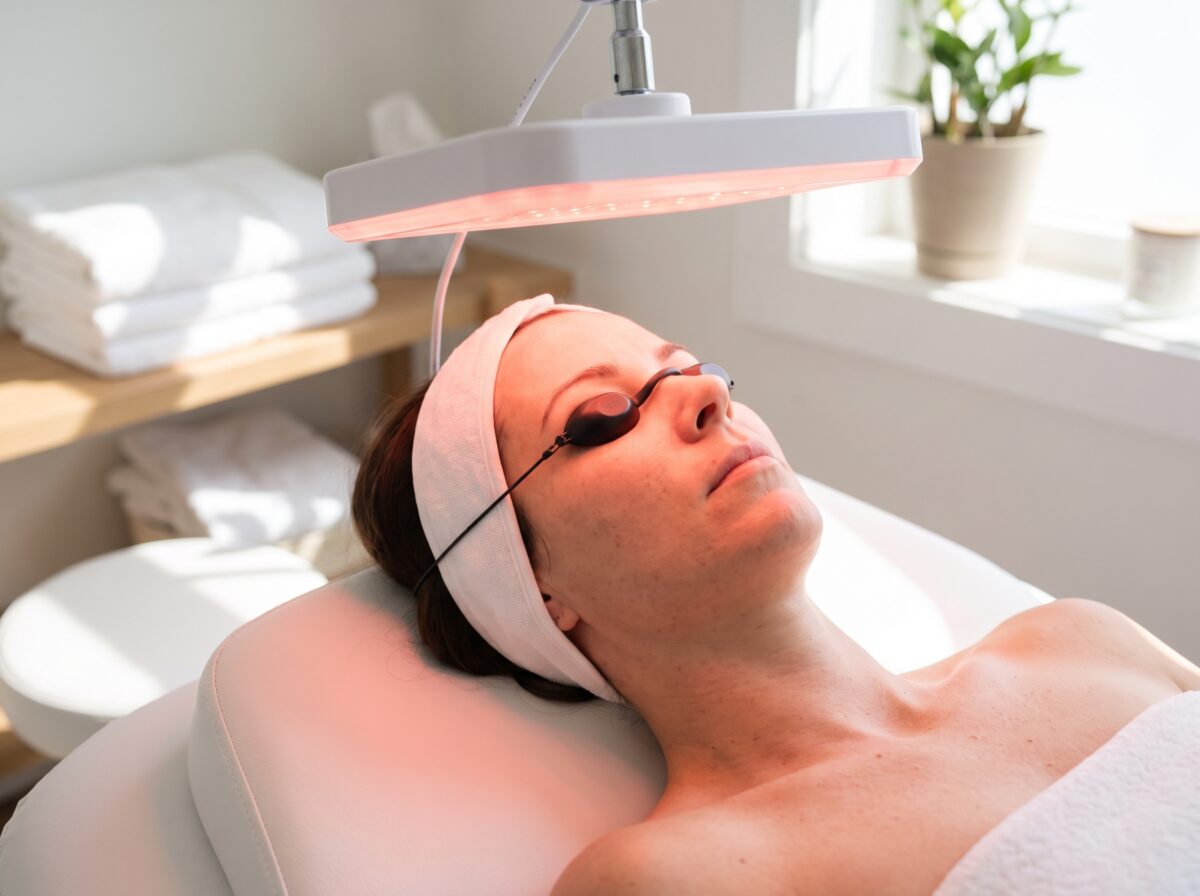
The technical term is photobiomodulation. According to current understanding, the powerhouses of your cells (mitochondria) absorb certain wavelengths of light and produce more energy as a result. With this extra boost, skin cells can switch off inflammation faster, repair themselves and form more collagen.
Important: LED has nothing to do with UV. There is no tanning, no sunburn, and unlike a laser there is no noticeable heat.
💡 No UV · 🌡️ No heat · ⏱ No downtime
Blue, red, near-infrared: which colour for what?
| Colour (wavelength) | Penetration depth | What it is used for |
|---|---|---|
| Blue (approx. 415 nm) | Surface | Blemished skin, acne: works against bacteria and regulates sebum |
| Red (approx. 633 nm) | Medium depth | Fine lines, skin texture, “glow”: stimulates collagen and cell energy |
| Near-infrared (approx. 830 nm) | Deeper | Calming, redness, regeneration after treatments |
These are the wavelengths our Dermalux® system uses as well. Good to know: near-infrared is invisible to your eye. You cannot see it, and it still works. That is why LED masks sometimes look “red only” even though there is more behind it.
The dose secret almost nobody explains
Quantity matters
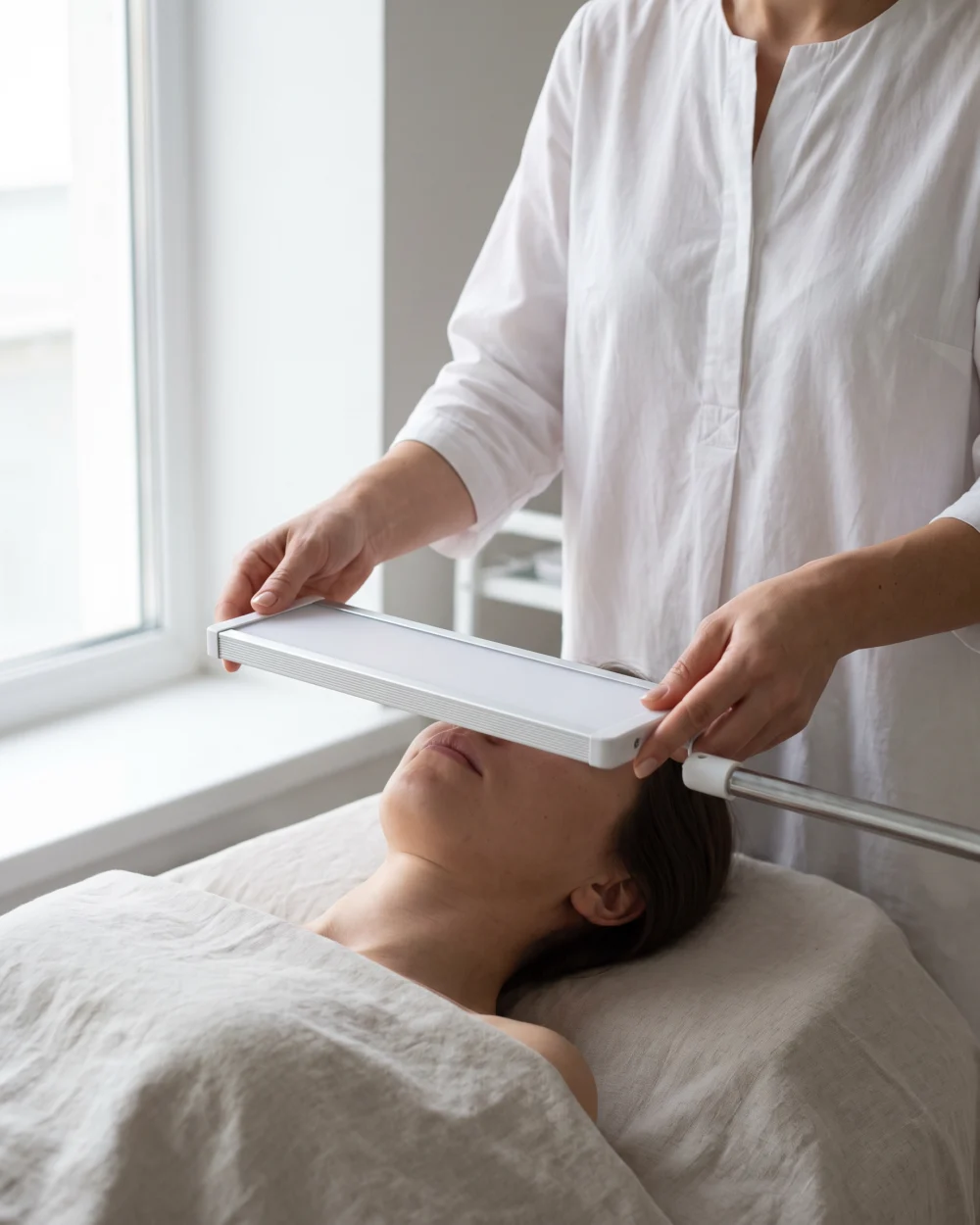
With light, it is not only the colour that counts but the energy density: how strong is the light (power density in mW/cm²) and how long does it shine? Together they give the dose.
And now it gets exciting: the dose-response curve is bell-shaped. Too little light does nothing at all. Too much light can weaken the effect again. So there is a sweet spot, and more is not automatically better.
The problem: the packaging of many masks only states the wavelength, rarely the power density or the distance to the skin. So you do not know whether you are in the sweet spot.
📈 Bell curve · ⏱ Strength × time · 🔍 Check the data sheet
Your check before buying
Look in the data sheet for the power density in mW/cm² and the recommended application time. If neither is stated anywhere, you do not know what the device really delivers. That is no proof it does nothing, but it is a warning sign.
LED mask for home: is it worth it?
An honest comparison
A good home mask can make sense if you use it regularly. Many end up in the cupboard after three weeks. The biggest advantage of the studio is therefore not even the light, but the fixed appointment.
Home devices usually have lower power than professional systems. So you need more time and more sessions for a similar effect. Weighed against the price of a good mask, the studio is often not more expensive.
Also: pay attention to eye protection. Strong bright light directly at the eye is unpleasant, and manufacturers recommend protection for blue light. A mask that leaves the eyes open is not a plus.
🏠 At home · 📅 Regularity · 👓 Eye protection
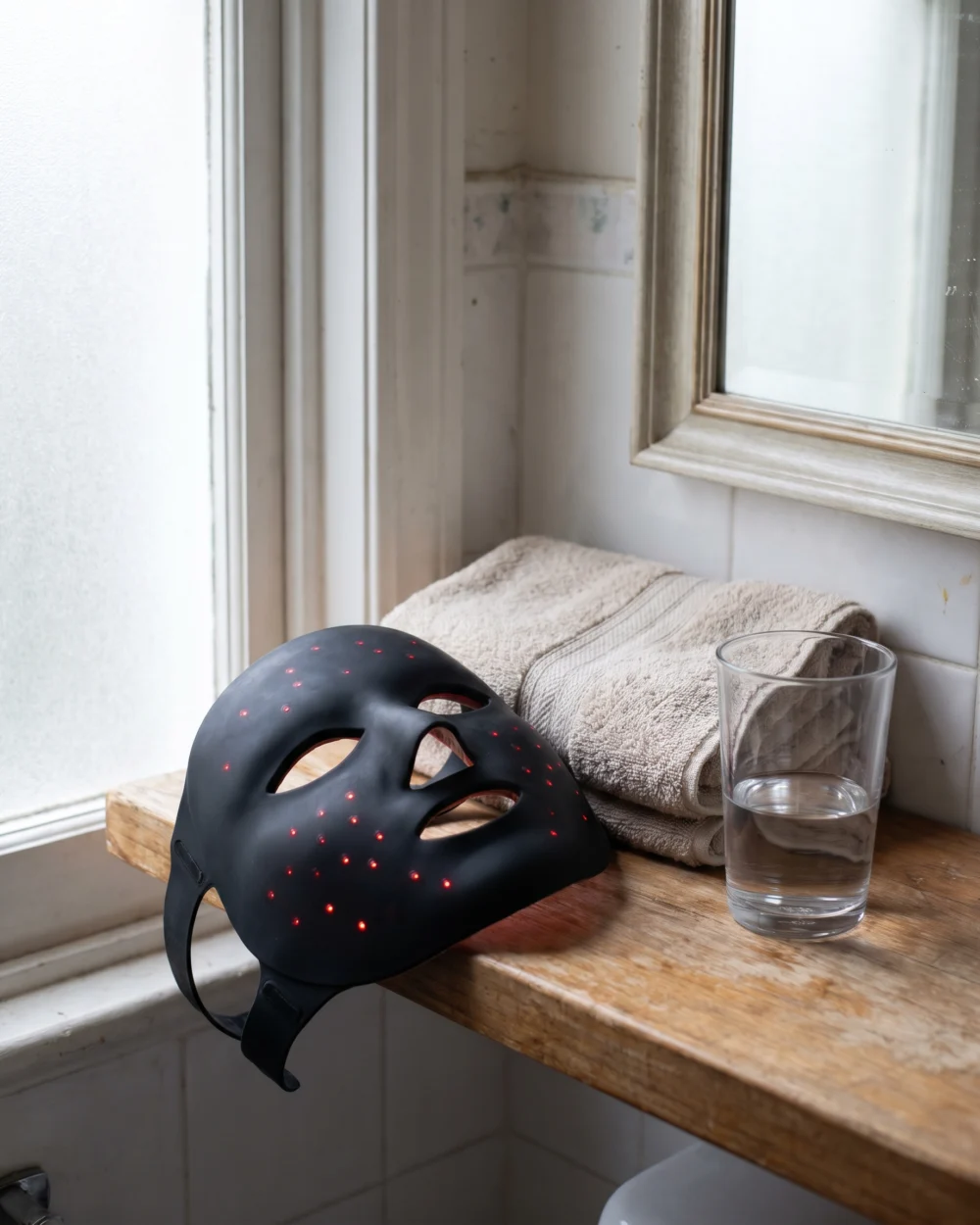
The red lamp from the pharmacy: same idea, different principle
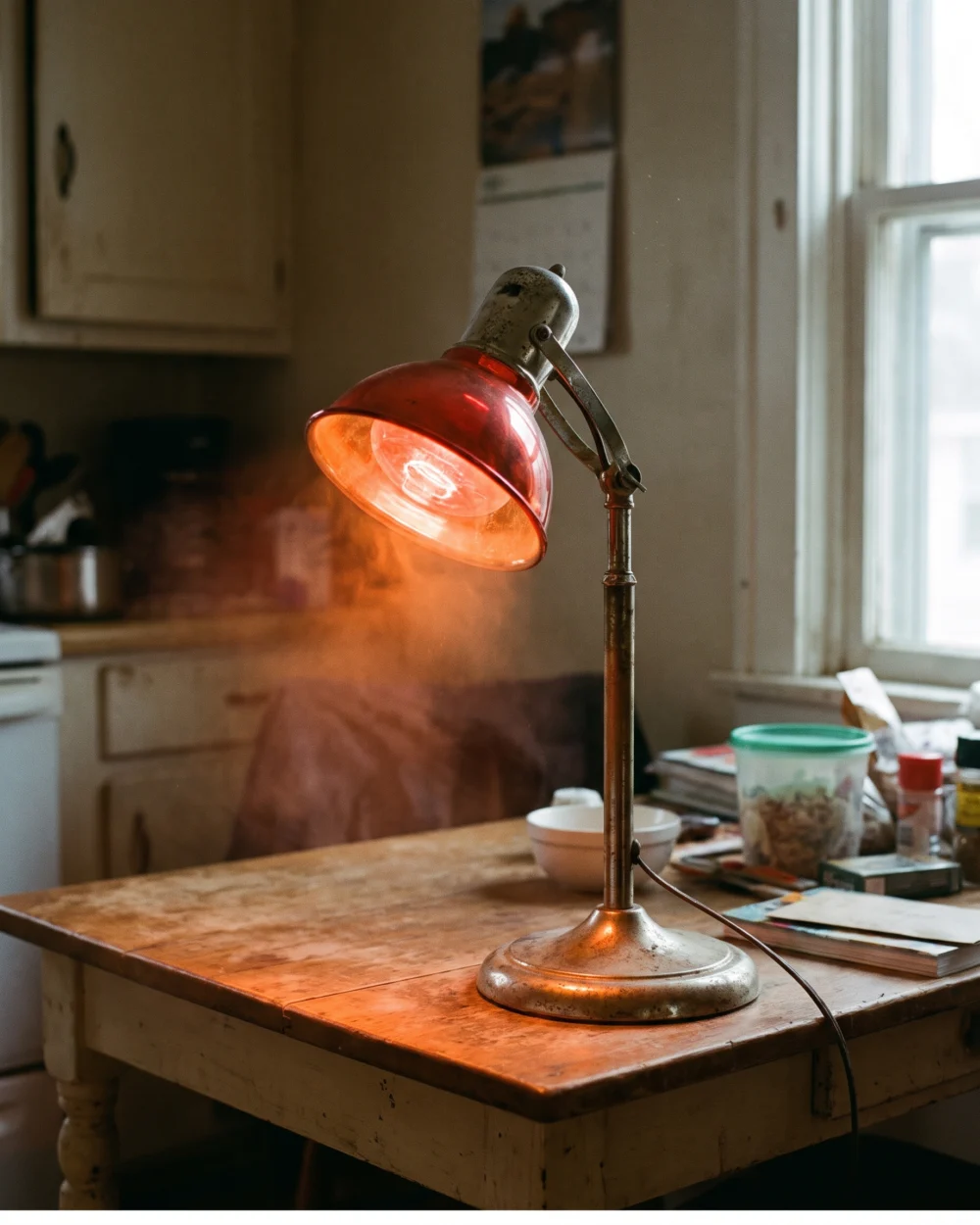
Careful, easy to confuse
The classic red lamp (infrared heat lamp) is a light bulb. It delivers broad infrared and above all heat. It is meant for muscle tension or colds, not for facial skin.
Why this matters: heat widens blood vessels. Anyone who already tends to redness (for example with rosacea or couperose) does themselves no favour. With repeated heat on the same spot, a net-like brown pattern can even develop. Specialists call this erythema ab igne.
LED light therapy, in contrast, works with very specific, narrow wavelengths and practically without heat. Same colour, completely different effect.
🌡️ Heat ≠ light therapy · ⚠️ Not on the face
What light therapy in a studio can do – and what it cannot
At our studio we work with the Dermalux® LED system. Realistically, it helps you mainly here:
- Blemished skin and acne: Blue light calms inflammation. As a complement to acne treatment, not as a replacement.
- After microneedling or a peel: The light calms the skin, reduces redness and shortens recovery. This is the use with the most benefit. More at microneedling and chemical peel.
- Sensitive, flushed skin: Near-infrared can soothe. With rosacea only without an acute flare-up and after consultation.
- Fine lines and complexion: The effects here are rather subtle. Expect fresher, not younger.
What interests you most: how often? For noticeable results with acne or complexion we recommend a course of 6 to 10 sessions one to two weeks apart. A single appointment mainly gives an instant glow. Important: every treatment works best when you come without make-up.
What LED cannot do: fill scars, smooth deep wrinkles or make pigment spots disappear in one session. Other methods are needed for that, which we discuss with you in the skin analysis.
Who should skip LED?
- With photosensitising medication, such as certain antibiotics, isotretinoin or St John’s wort, we discuss it beforehand.
- With epilepsy caution is needed, because light can trigger seizures.
- With very acute skin problems such as fresh burns or open skin we wait.
Even with hormonal acne, light is only one building block. Why, we explain in the article What to do about hormonal acne. And anyone relying on the sun: sun protection stays mandatory, see SPF 30 vs. 50.
How to find out what your skin really needs
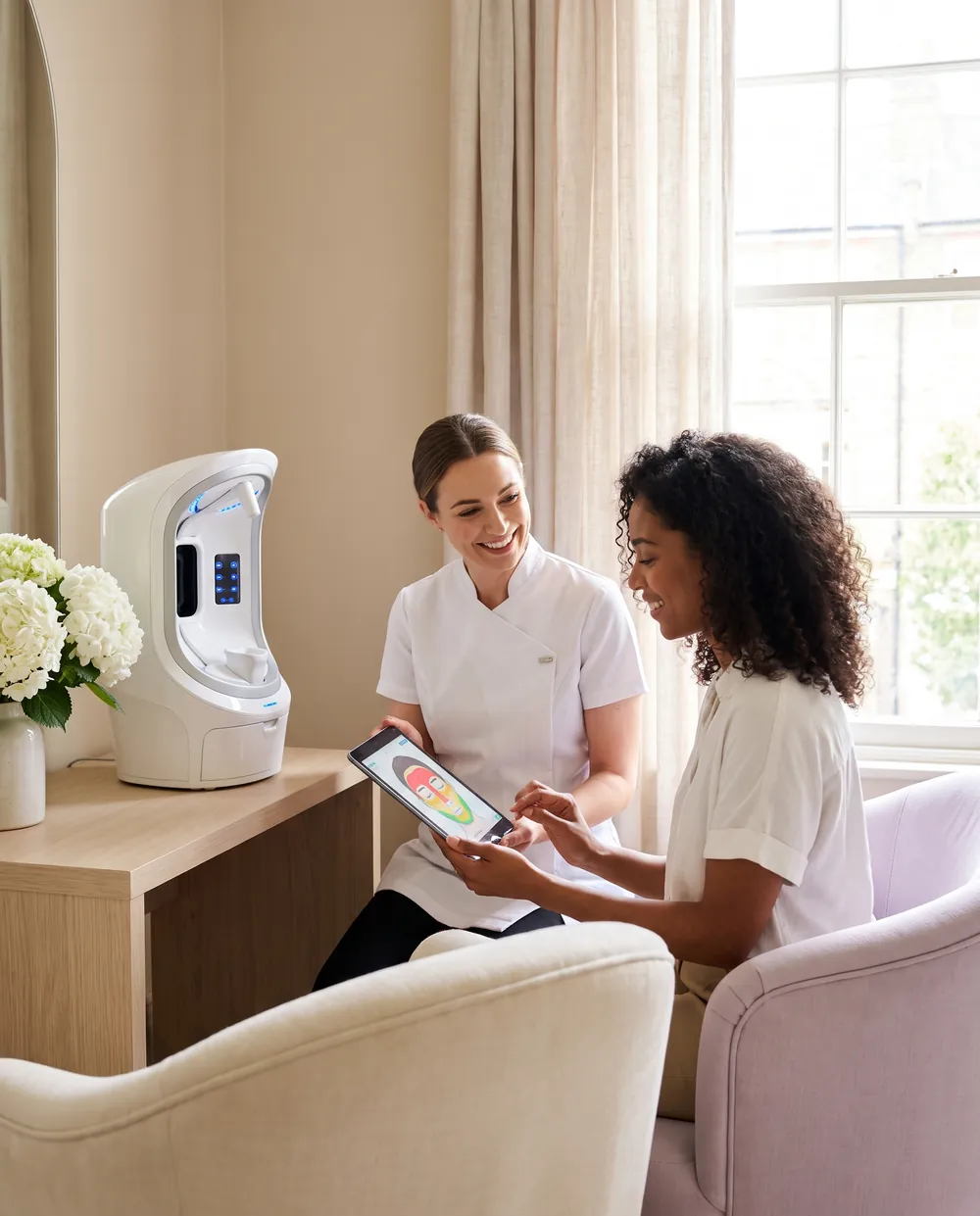
Whether light therapy makes sense for you depends on your skin. In the free skin analysis we tell you honestly what makes sense for you and what does not. Prices for light therapy: add-on from €30, single treatment €50, 12-session course €500.
1
Book an appointment
Book online – your skin analysis is completely free.
2
Skin analysis
We assess skin type, hydration, pores & pigmentation.
3
Get your plan
You get an honest recommendation – no obligation.
✦ 100 % free
Your free skin analysis in Munich
Take the first step towards calm, clear skin. Together we find out whether LED light makes sense for you, on its own or as a complement.
- Professional assessment of your skin type
- Honest, personal treatment recommendation
- Tips for your home care
- No obligation & no pressure to buy
FAQ about LED light therapy
How often should I use LED light?
For noticeable effects we recommend 6 to 10 sessions one to two weeks apart. After that an occasional refresher appointment is enough.
Is LED light dangerous for the eyes?
We cover the eyes with protective covers. At home, a mask should offer eye protection, especially with blue light.
Can I use LED light with rosacea?
Without an acute flare-up, near-infrared can soothe. We discuss this beforehand, also because heat is a trigger for rosacea.
Is the red lamp from the pharmacy the same?
No. It is a heat lamp with a broad spectrum. It is not meant for the face and can increase redness.
Can I combine LED with microneedling?
Yes, it is even very sensible. We often use LED right after microneedling or a peel to calm the skin.