Rosacea-prone skin does not need ten products, but four habits: cleanse lukewarm, support the barrier with a mild cream, wear mineral sunscreen every day and try only one new product at a time. It sounds unspectacular, but it is the difference between “another flare-up” and calm skin. And there is one thing that burdens sufferers most: the thought that a flare-up was their fault. Why that is mostly not true, and what is still hidden in many “sensitive” products, you will read here.
The honest answer from a beautician, up front: Skincare does not cure rosacea. The treatment belongs with the dermatologist. What you do have in your own hands is irritating the skin less and reducing the number of flare-ups. That is exactly what this guide is about.
To start: if you first want to find out whether it is rosacea or couperose, the article Couperose vs. Rosacea will help you. How rosacea develops and in which stages it progresses is on our page about rosacea treatment. Here it is only about everyday care.
✨ Unsure which skincare suits your skin? We will take a look for free – no obligation.
Contents
The basic rule: reduce irritation, support the barrier
The principle
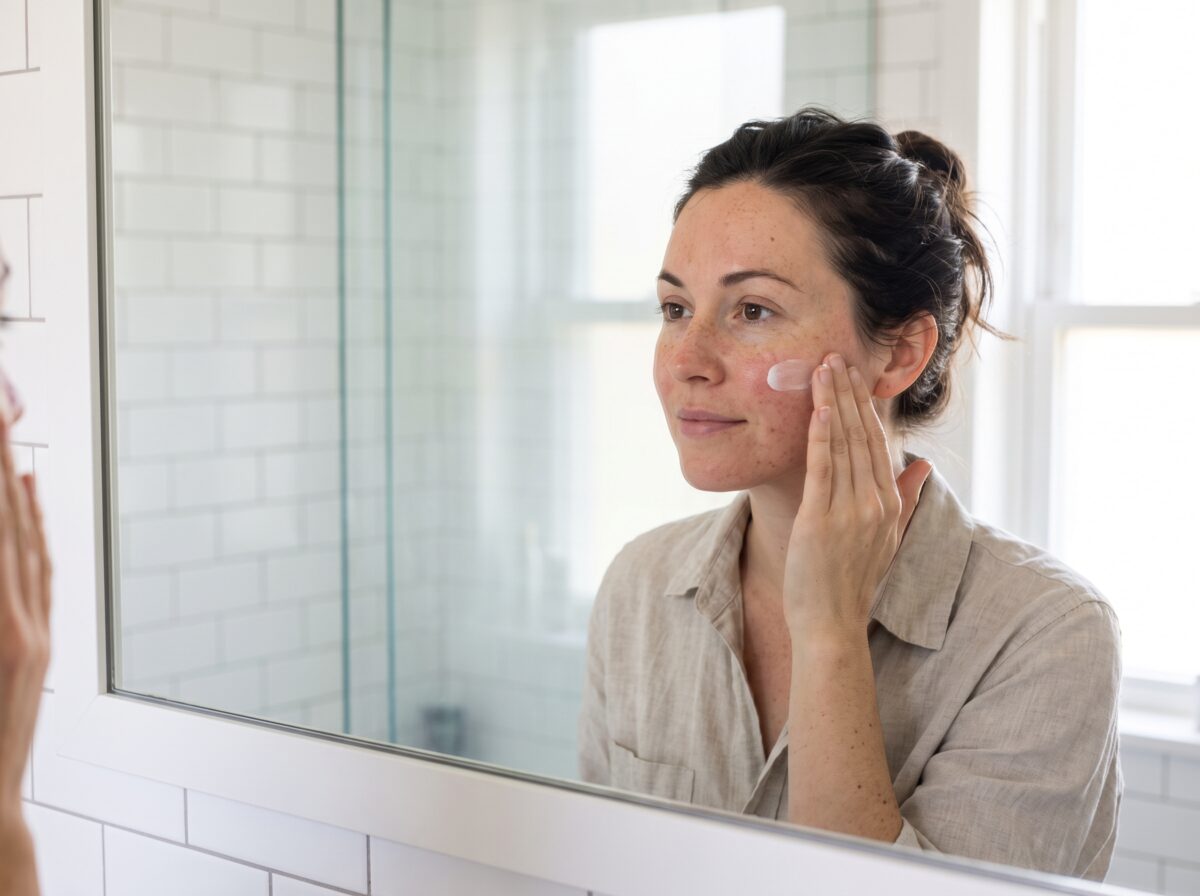
With rosacea the skin barrier is often disturbed and the skin reacts oversensitively to triggers such as heat, friction or fragrances. That is why: every product you can leave out is one possible irritant fewer.
And important: rosacea comes in waves. Sometimes the skin is calm, sometimes not, and that does not always have to do with your skincare. A flare-up is no sign that you did something wrong. A small skin diary helps, in which you note flare-up, weather, stress and products. You will find more on dietary triggers in the article Rosacea and diet.
📓 Skin diary · 🧘 Less is more · 💧 Support the barrier
Cleansing: lukewarm is the rule
- Lukewarm, not hot and not ice cold. Hot water dilates the vessels. But an abrupt cold shock is stress for the skin as well. In between lies the comfort zone.
- With your hands, not with a brush or flannel. Friction is a trigger.
- Mild and fragrance-free: creamy cleansers or gentle syndets. No scrub grains, no alcohol.
- Thoroughly in the evening, often just water in the morning. Many sufferers tolerate plain water in the morning better than cleanser.
- Pat dry instead of rubbing, with a clean, soft towel.
On micellar water: it can be practical but often contains surfactants and sometimes fragrance. If you use it, choose a fragrance-free version and rinse afterwards with lukewarm water. More in the article Micellar water.
The right cream
The basics matter
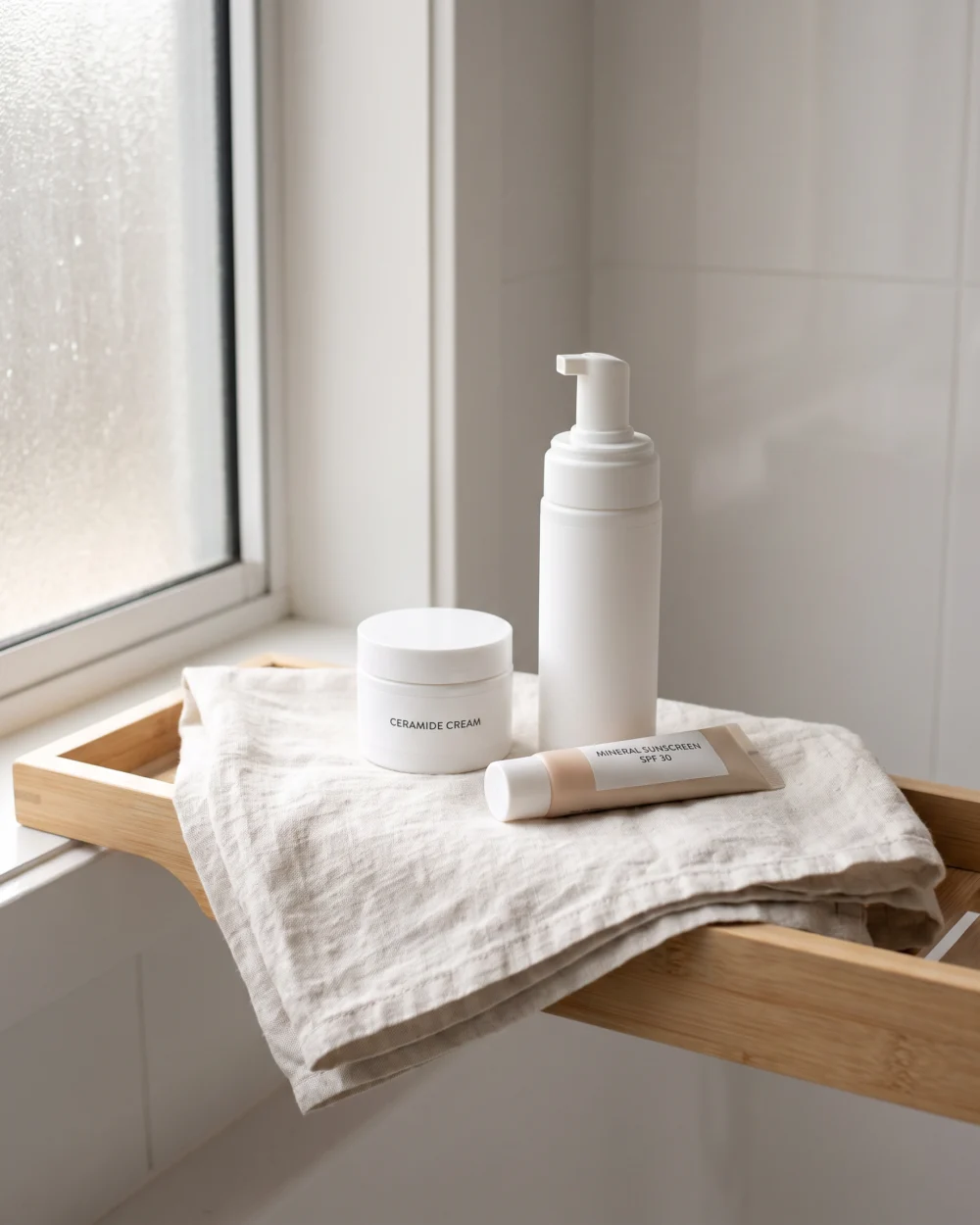
Ceramides stabilise the skin barrier. Glycerin and hyaluronic acid bind moisture. Panthenol soothes. These are the usual suspects you can look out for.
Light or rich? In the morning rather a light gel cream, in the evening it may be a little more. But beware of very greasy products: they can overwhelm the skin, especially around the mouth and nose (see perioral dermatitis).
Actives such as niacinamide (low dose) or azelaic acid can help. With azelaic acid the dose matters and medical consultation makes sense.
🧴 Ceramides · 💧 Glycerin · 🌿 Panthenol
Sun protection: mineral and tinted
The most important step
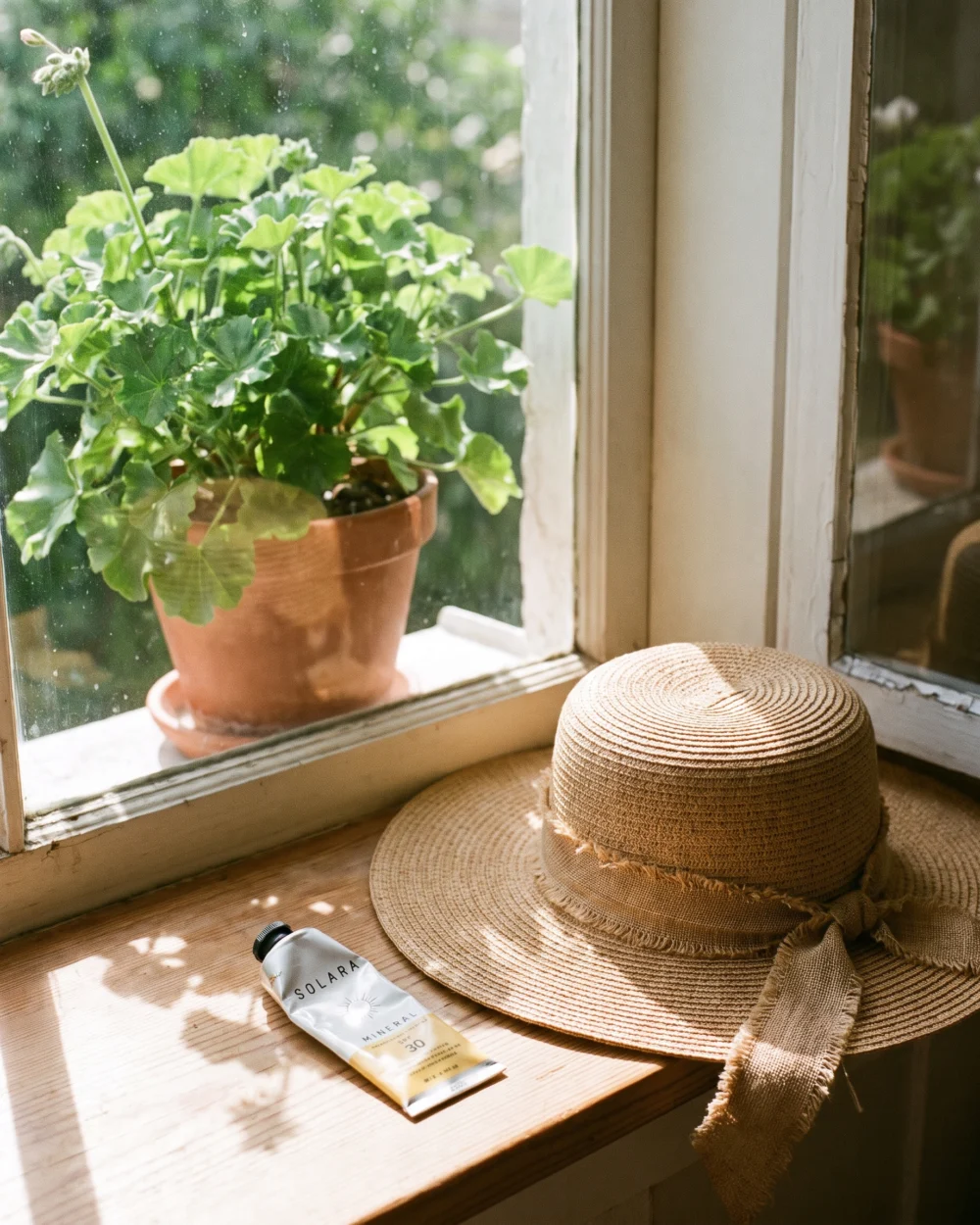
Sun is one of the most common triggers of rosacea flare-ups. That is why sun protection is not cosmetics but support for therapy. Every day, also in winter and also when it is cloudy. More on choosing the factor in the article SPF 30 vs. 50.
Mineral filters (zinc oxide, titanium dioxide) often irritate less than chemical filters, which sometimes sting. A tinted sunscreen additionally conceals slight redness. The iron oxides in it also block part of the visible light.
Tip: UVA light also arrives behind windows, in the car or at a desk by the window. A portion for the face is roughly two finger lengths of cream.
☀️ Daily · 🧴 Mineral · 🎨 Tinted helps
Ingredients: what may be in it and what may not
The label check
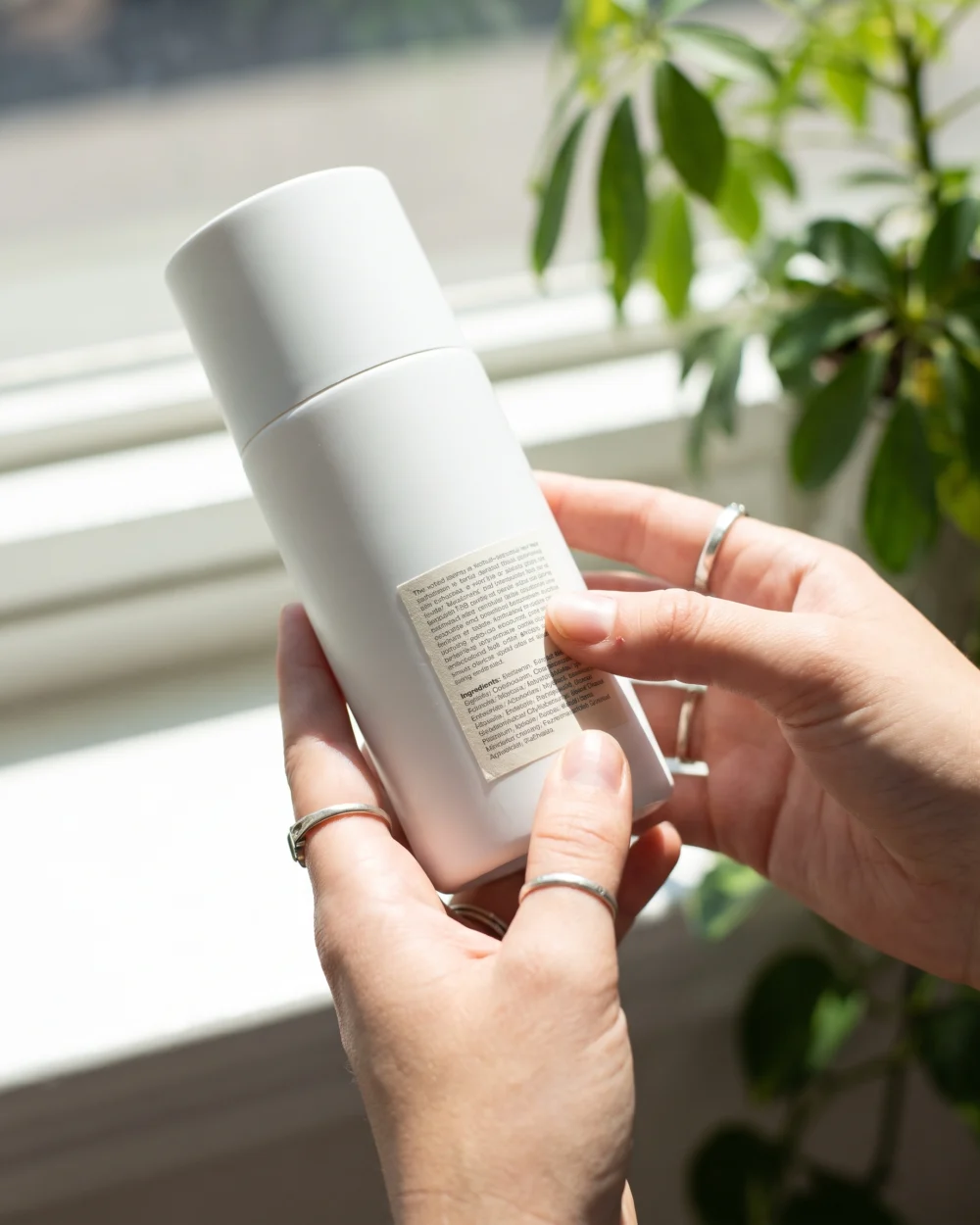
Turn the bottle around and read the ingredient list (INCI). “For sensitive skin” on the front does not mean nothing irritating is inside.
🔍 Read the INCI · 🚫 Not the advertising text
| Better avoid | Caution, only slowly | Usually well tolerated |
|---|---|---|
| Alcohol denat. (alcohol), menthol, camphor, eucalyptus | Retinol and retinoids | Ceramides |
| Fragrance, essential oils, parfum | AHA/BHA acids | Glycerin, hyaluronic acid |
| Scrub grains, cleansing brushes | High-dose vitamin C | Panthenol, allantoin |
| Witch hazel with alcohol | Strong surfactants (SLS) | Niacinamide (low), azelaic acid (medically agreed) |
Home remedies are not automatically gentle either. Neat tea tree oil, lemon, vinegar or toothpaste on pimples are strong irritants. It is discussed whether skin mites (Demodex) play a role in rosacea, but that is a matter for medical treatment and no reason to experiment aggressively yourself.
Introduce new products safely
- Only one new product at a time. Otherwise with a reaction you do not know who is to blame.
- Test first: a few days along the jawline or behind the ear before it goes on the face.
- Two weeks’ pause until the next new product.
- Do not start during a flare-up. Test new actives in a calm phase.
Too many products are one of the most common skincare mistakes. More in the article Common mistakes in your skincare routine.
Make-up with rosacea
Make-up is allowed. What matters is that it does not additionally irritate: light, non-comedogenic textures, mineral products and a greenish tinted primer that neutralises redness. And removing it in the evening: gently, lukewarm, without rubbing.
Your plan for a flare-up
- Reduce to the basics: mild cleanser, cream, sunscreen.
- No new actives and no peels.
- Cool, but not icy: briefly apply a cool, damp cloth.
- Note triggers (heat, alcohol, stress, new products).
- With pustules, burning or eye involvement see a dermatologist. More on the differences in couperose and rosacea.
How to find out what your skin really needs
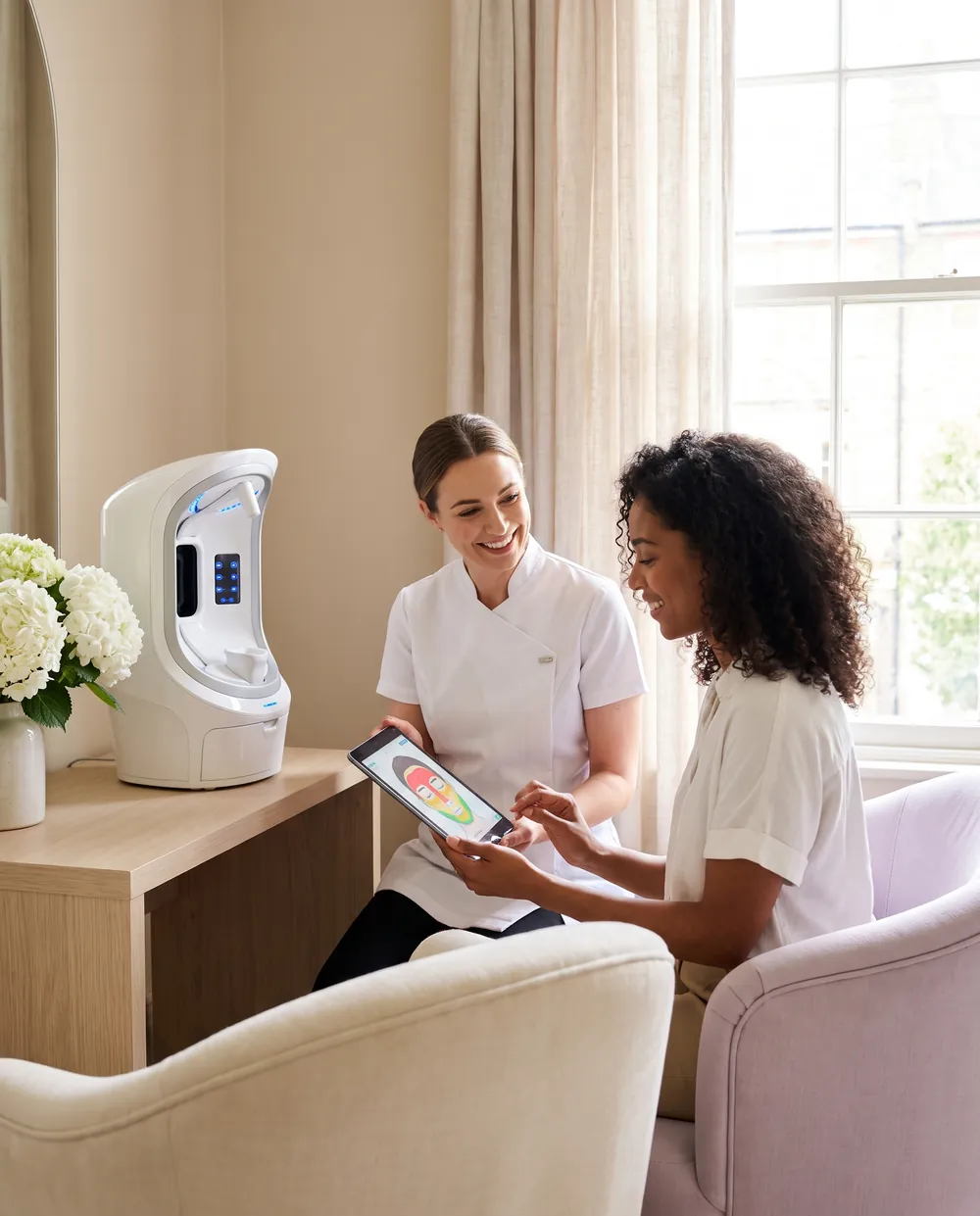
With us you do not get a standard routine but an analysis of your skin. We tell you honestly what makes sense for your skin, for example our gentle rosacea treatment or, as a complement, light therapy (more on LED in the article LED mask and red light).
1
Book an appointment
Book online – your skin analysis is completely free.
2
Skin analysis
We assess skin type, hydration, pores & pigmentation.
3
Get your plan
You get an honest recommendation – no obligation.
✦ 100 % free
Your free skin analysis in Munich
Take the first step towards calmer skin. Together we find out which skincare supports your skin and what it had better not get.
- Professional assessment of your skin type
- Honest, personal treatment recommendation
- Tips for your home care
- No obligation & no pressure to buy
FAQ about rosacea skincare
Which cream is best for rosacea?
A mild, fragrance-free cream with ceramides, glycerin or panthenol. Which texture suits depends on your skin: light in the morning, in the evening gladly a little richer.
May I do a peel with rosacea?
Not during a flare-up and not with scrubs. Gentle treatments agreed medically or professionally are possible in calm phases.
Do I need sun protection in winter?
Yes. UV radiation is there in winter too, and cold weather or dry heating air additionally burden the skin.
Which sunscreen suits rosacea?
Usually mineral (zinc oxide, titanium dioxide) and fragrance-free, tinted if needed. What matters is that you use it every day.
Does hyaluronic acid help with rosacea?
It can provide moisture and be well tolerated. Against the inflammation itself it does not help.